
Quick summary:
|
|---|
Four deadline moves in ten weeks isn't a deadline. It's a pricing experiment that finally landed. As of July 20, 2026, Claude Fable 5's subscription access is permanent — just not the way most Pro users were hoping.
I don't have Fable 5 access myself right now, but I've been tracking this rollout closely since it directly affects how developers on Pro should be routing their agent workflows. Here's what actually changed, why it happened, and — more usefully — what to actually do about it if you're a developer or founder on the Pro plan right now.
The Split, in Plain Terms
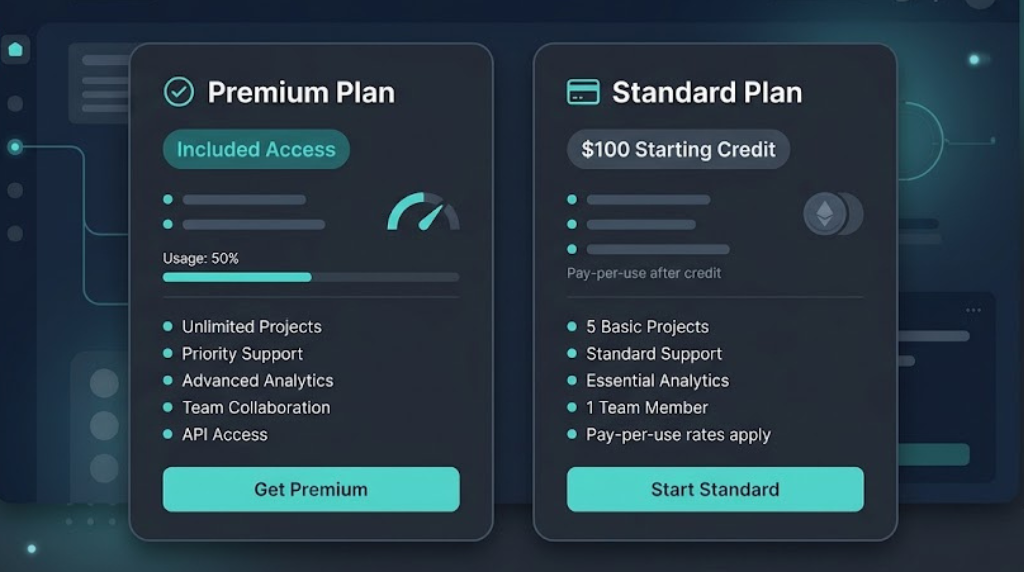
Starting July 20, Anthropic locked in an asymmetric structure:
Max and Team Premium subscribers keep Fable 5 as a standing feature, included at up to 50% of their weekly usage limits. Per Anthropic's own Claude Help Center documentation, that 50% is drawn from the same shared usage pool as your other model usage — not an additive bonus. Every Fable 5 session on Max is spending the same weekly budget your Sonnet 5 and Opus 4.8 work draws from, not a separate allowance layered on top.
Pro and Team Standard subscribers lost included access entirely as of July 19, 11:59:59 PM PT. In its place: a one-time $100 usage credit, after which Fable 5 access is billed at $10 per million input tokens and $50 per million output tokens. That's the widest input/output pricing spread of any model in Anthropic's current lineup — for comparison, Opus 4.8 runs $5/$25 and Sonnet 5 is $2/$10 during its introductory pricing window through August 31, 2026.
What the $100 Credit Actually Covers
This is the number that matters most if you're deciding whether to stay on Pro. At the published $50-per-million-output-token rate, $100 covers roughly 2 million output tokens — but that's a best-case, output-only estimate. Real bills include input tokens too, so actual usage will exhaust the credit faster than the round number suggests.
Fable 5 supports up to 128,000 output tokens per response against a 1-million-token context window — architecture built specifically for long, output-heavy agentic work: multi-file coding migrations, deep document analysis, extended autonomous sessions. That's exactly the kind of workload that burns through output tokens fast. For casual, occasional use, $100 might stretch across several sessions. For anyone running Fable 5 as part of a regular agent pipeline, it's realistically a runway measured in days, not weeks.
Why This Happened
Anthropic's original plan, per multiple reports, was to drop Fable 5 from subscription plans entirely and move it to metered-only access. That plan didn't survive contact with the competitive landscape. This resolution follows at least three extensions since the original July 7 cutoff — each one buying Anthropic more time to figure out actual demand and capacity.
The specific pressure point: OpenAI's GPT-5.6 Sol reached general availability on July 9 at $5 per million input tokens and $30 per million output tokens — roughly half Fable 5's input cost and 60% of its output cost. On the Artificial Analysis Intelligence Index, an independent composite benchmark, the two models land within about a point of each other — roughly 60 for Fable 5 versus roughly 59 for Sol. Near-parity on capability, at a meaningfully lower price, made a Max or Team Premium plan that excluded Anthropic's best model a hard sell against that competition.
That's the honest read: Anthropic didn't cut Fable 5's price to match Sol. It restructured who gets included access, and how much of it — access economics, not a capability response.
The Real Decision: What Should You Actually Do
This is where most of the coverage stops at "here's what changed." The more useful question is what to do next, and it depends on your actual usage pattern.
If you're a Pro user running Fable 5 regularly for agentic work — multi-step coding tasks, long autonomous sessions, anything that burns output tokens at scale — model the crossover math before your credit runs out. If your typical monthly Fable 5 usage would clear that 2M output token mark in a matter of days, Max's included access is very likely the cleaner economics, even accounting for the subscription price difference.
If you're a Pro user who touches Fable 5 occasionally — for the rare task that genuinely needs the 1M-token context window or extended output — staying on Pro and metering your usage is probably fine. The $100 credit and subsequent per-token billing will cover light, deliberate use without needing to upgrade.
If you're building agent workflows in something like LangGraph, the more interesting move isn't "upgrade or don't" — it's routing. Not every step in an agent loop needs Fable 5's full capability. Route the routine steps — data extraction, simple transformations, straightforward tool calls — to Sonnet 5 or Opus 4.8, both of which are meaningfully cheaper per token, and reserve Fable 5 specifically for the steps that need the long-context reasoning or extended autonomous output it's built for. That's the practical shape of "frontier access as a pricing tier, not a promotion" — you don't need every call in your pipeline hitting the most expensive model in the lineup.
What This Signals Going Forward
The pattern is worth internalizing beyond this specific announcement: unlimited frontier-model access bundled into a flat subscription price appears to be ending as a default expectation across the industry, not just at Anthropic. When a near-frontier competitor shows up at a fraction of the cost, labs are increasingly competing on access terms and routing economics, not just raw benchmark scores. If you're building products or internal tools on top of these models, the practical lesson is to treat model access itself as something you actively manage — with fallback routing and cost ceilings — rather than assuming today's terms hold for the life of your project.
For what it's worth, this is exactly the kind of dynamic that makes open-weight alternatives like Kimi K3 more interesting than they'd otherwise be — not because they're strictly better, but because they change your negotiating position when a vendor's terms shift again, which on this lineage's track record, they will.
AIWerse Verdict
Fable 5 isn't worth staying on Pro for by default anymore — not at $50/M output tokens for regular agentic use. If you're burning through Fable 5 calls weekly, Max's included access pays for itself fast; do the crossover math before your $100 credit runs dry, not after.
But most Pro users building agent workflows don't actually need Fable 5 for every step. Our take: route by task first, upgrade only if the math still says you need it. Reserve Fable 5 for the handful of steps that genuinely need frontier-level reasoning, and let Sonnet 5 or Opus 4.8 carry the rest of your pipeline. That's usually the cheaper answer than upgrading outright.
FAQs
Does Claude Pro still include Fable 5 after July 20?
No. Pro and Team Standard subscribers no longer get Fable 5 as a bundled feature as of July 20. Eligible users receive a one-time $100 usage credit, after which further access is billed at $10 per million input tokens and $50 per million output tokens.
How far does the $100 credit actually go?
At the published output rate, it covers roughly 2 million output tokens in a best-case, output-only scenario — input tokens add to the cost, so real usage will exhaust it faster. For regular agentic use, expect it to last a session or two rather than weeks.
Is it worth upgrading from Pro to Max just for Fable 5?
It depends on your usage pattern. If you're running Fable 5 regularly for output-heavy agentic work and would burn through the $100 credit in days, Max's included 50%-of-limits access is likely the better economics. If your Fable 5 use is occasional, staying on Pro and metering usage is probably more cost-effective.
Why did Anthropic reverse its plan to drop Fable 5 from subscriptions?
The most-cited explanation is competitive pressure from OpenAI's GPT-5.6 Sol, which launched at roughly half Fable 5's input cost while scoring within about a point of it on an independent capability benchmark. A premium plan that excluded Anthropic's best model became harder to justify against that pricing.
Does Fable 5 access on Max come out of a separate usage pool?
No — per Anthropic's Claude Help Center, the 50%-of-weekly-limits allowance for Fable 5 draws from the same shared usage pool as your other model usage on Max and Team Premium, not an additional allowance on top.
What should I do if I'm building AI agents on Pro right now?
Consider routing by task rather than defaulting every call to Fable 5. Use Sonnet 5 or Opus 4.8 for routine steps in your pipeline, and reserve Fable 5 specifically for tasks that need its long-context reasoning or extended output capacity.
Is Claude Fable 5 still free?
Not by default anymore. Max and Team Premium subscribers get Fable 5 included at no extra cost, up to 50% of their weekly usage limits. Pro and Team Standard subscribers no longer get free included access — they receive a one-time $100 credit, then pay metered rates of $10 per million input tokens and $50 per million output tokens.
Related News & Updates
Junaid Nawaz is the founder of AIwerse and a developer focused on AI tools, agentic workflows, and builder-focused tech. He covers AI model releases, coding tools, and platform updates for developers and teams building with AI. You can follow AIwerse on X (@AIwerse).